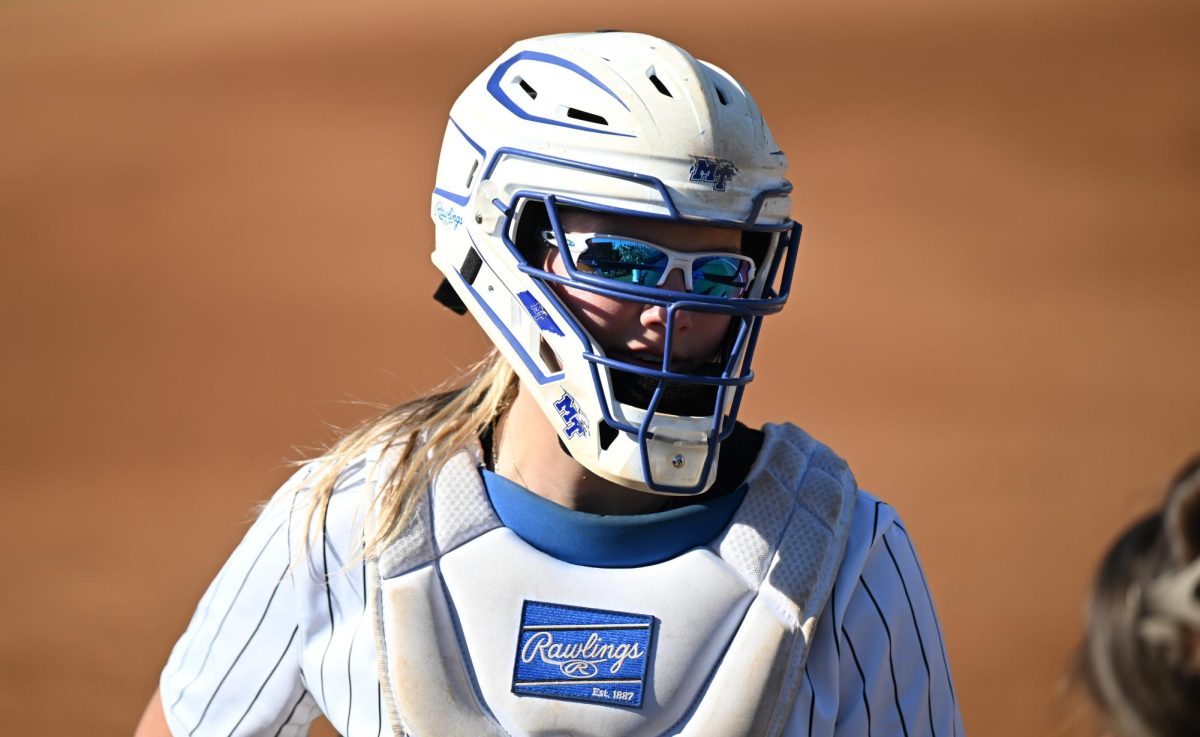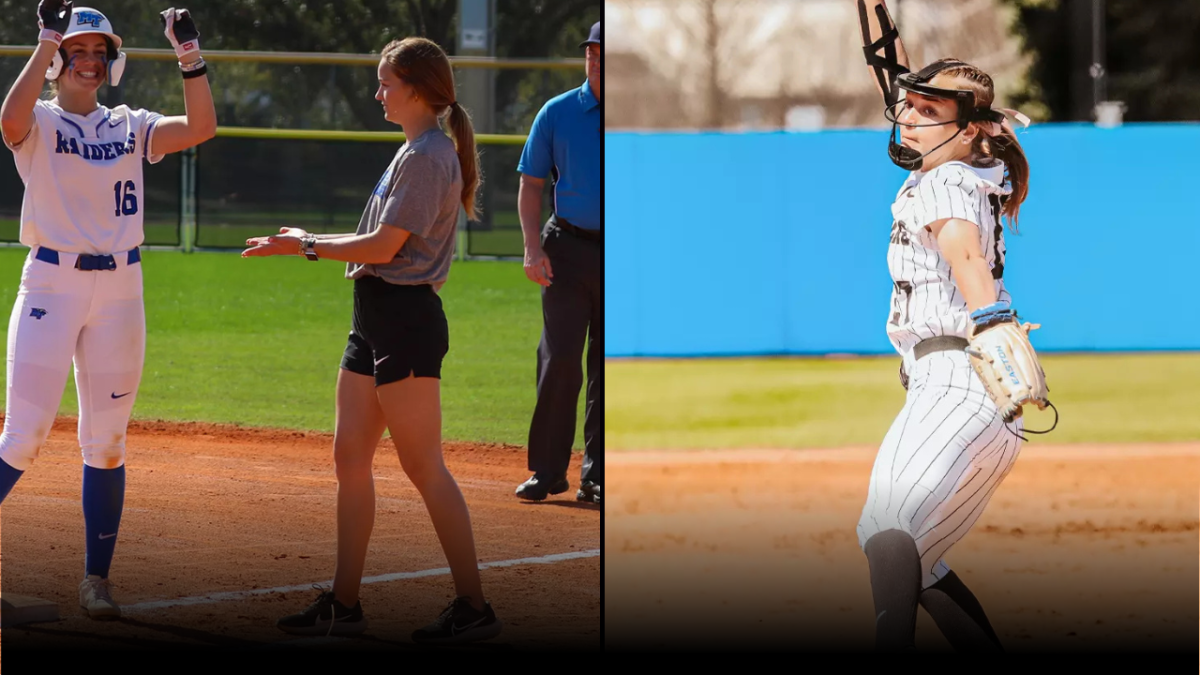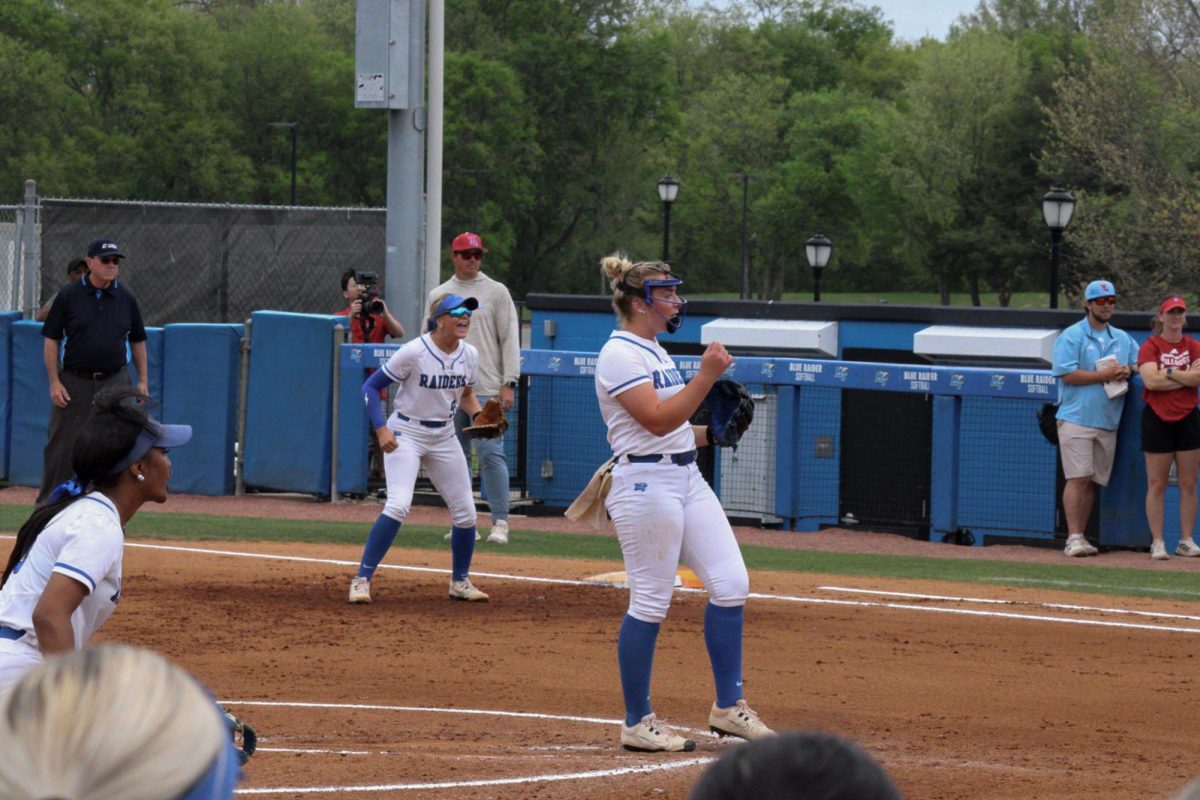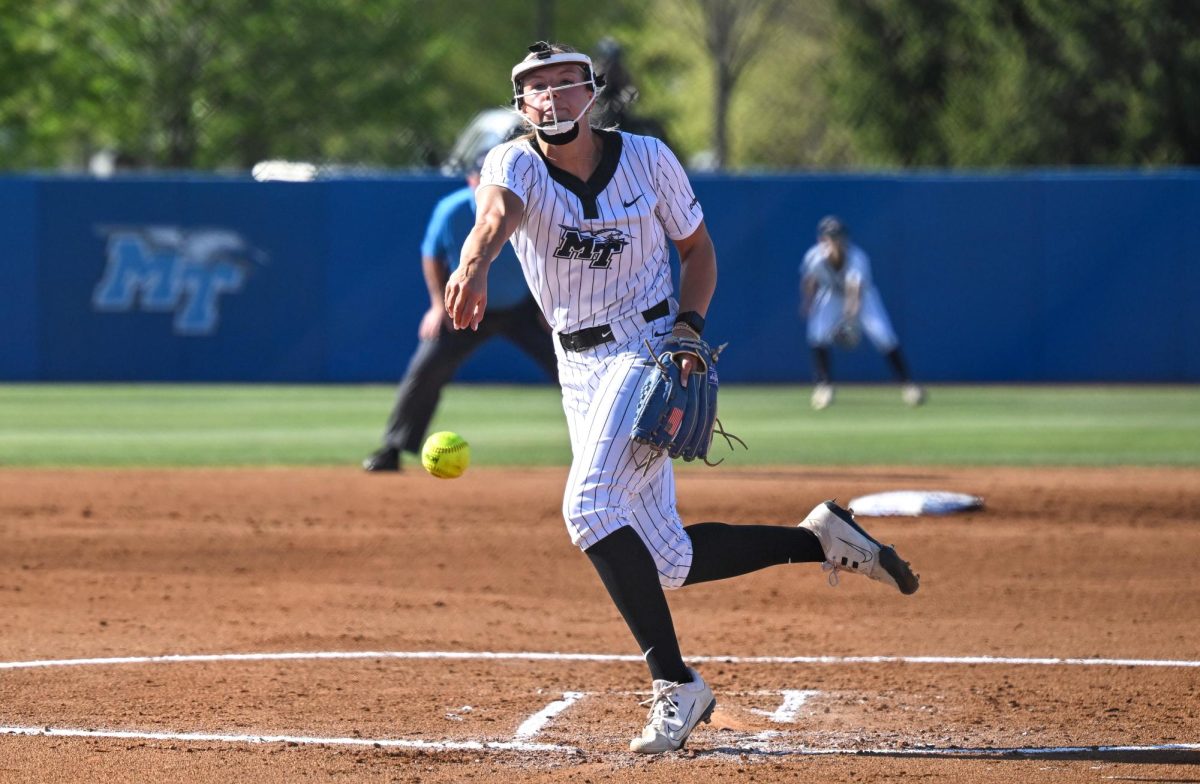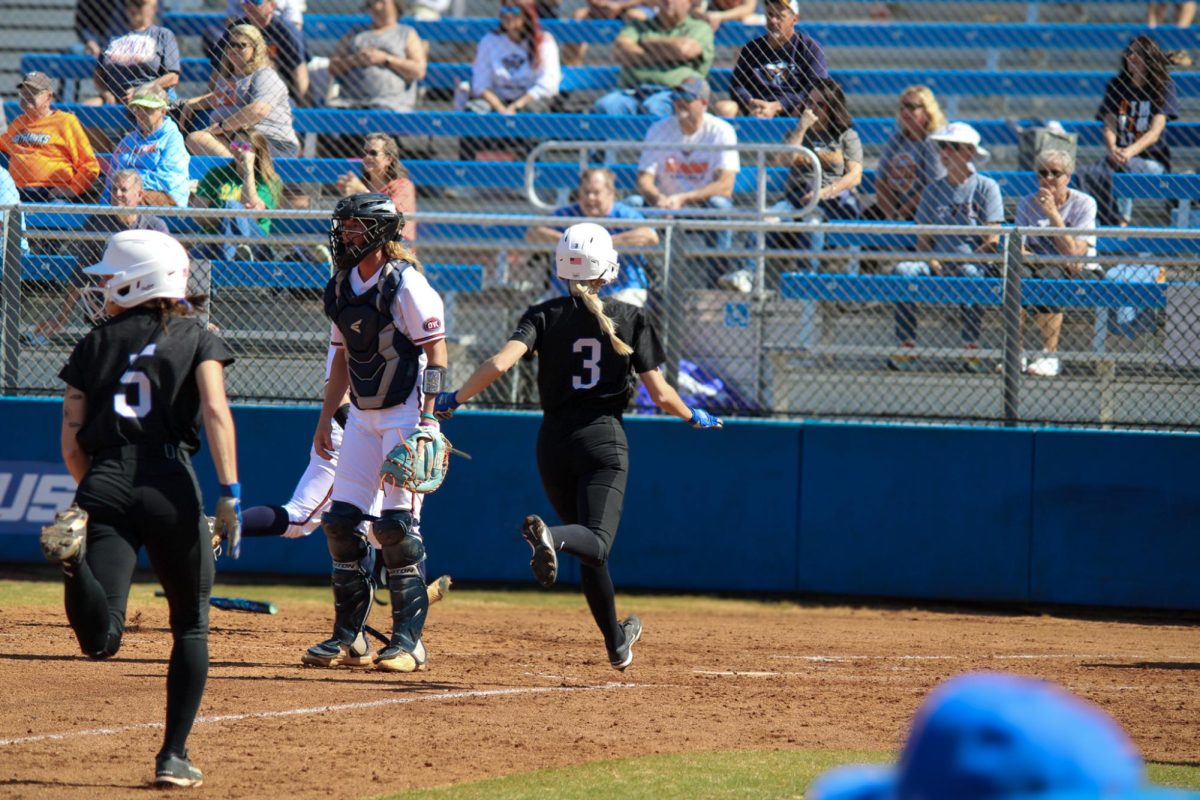
When most students end their day, Lexi Medlock is just getting started.
As a student-athlete at Middle Tennessee State University, Medlock balances a full-time course load with practice and travel for games, sometimes logging ten hour days to ensure she completes her work and competes on the field.
Managing academic and athletic demands has taught Medlock discipline and the hard work required to compete in Division I athletics.
Medlock represents students on many college campuses who face the challenge of balancing coursework with extensive hours in a sport. Eligibility for Division I athletes depends on the students’ academic standings, proving little to no room for mistakes.
For Medlock, her day is filled with a packed and overwhelming daily schedule filled with classes, workouts and practices.
“Right now, I have a bunch of classes, and we hit in the middle of the day,” said Medlock, a senior outfielder with the MTSU softball team. “We work out in the morning, we lift, we hit, we practice every day and obviously still have school.”
Medlock began her college career at MTSU in 2023 and quickly learned the demands of student-athlete life — including consistent practice weeks, travel and finding the time for coursework in between.
In her final year, Medlock attends classes five days a week — 15 credit hours. MTSU encourages student-athletes to enroll in online courses as much as possible. Medlock takes three virtual classes.
As an elementary education major, some semesters proved challenging, keeping up with school and athletic demands. However, spring 2026 is the easiest semester, Medlock said.
“Those [classes] used to be busy, because I used to have to go to visit elementary schools, student teach, come to practice, then we have weights,” Medlock said.
Throughout the preseason, MTSU softball practices six days per week, with Monday being a rest day. Despite the constant practice schedule, the team averages 20 hours per week, the NCAA’s legal limit.
“[Softball] keeps a good schedule for you,” Medlock said. “You have the hits time, weights time, practice time, and you have class, so you have to be on that schedule.”
During the academic breaks between the spring and fall semesters, the team doesn’t hold practices. However, players usually return a week early before the spring semester, Medlock said.
“We start [practice] at 2:45 p.m. every day, and we usually do offense and defense that day,” Medlock said. “It’s pretty taxing, you have to practice hard, so the game gets easier. We really go hard at everything we do.”
Despite the structure, finding enough time in the day remains a challenge, Medlock said. A 2023 NCAA study showed that women in Division I sports have a heightened sense of mental health concerns, with 44% of participants claiming they are “overwhelmed with by all you had to do,” the study said.
While Medlock doesn’t experience mental health challenges, the team gets anxious on the field and often gets upset when practice doesn’t translate into their games, she said.
“We play such a sport that is very mental,” Medlock said. “The struggle mentally is on the field, because it’s such a taxing mental sport, and then you have all the other stuff going on in life still. How many hours we put into our sport, and if you fail, that’s where you mentally struggle.”
Still, MTSU softball continues to build a strong support system for its players, with the team cheering and rooting for each other on and off the field.
“That’s what the girls are good for,” Medlock said. “Every teammate knows what you’re going through because we’ve all been through it. We push each other in academics and sports.”
Former MTSU pitcher and current assistant coach Gretchen Mead, had a vastly different playing career from the current roster’s experience, despite graduating in December 2023.
“There were no online options for us,” Mead said. “My senior year and fifth year, where the first year online was accessible. You could do it, but it’s not what it is now. So, we missed class a lot more. There’s a lot more resources nowadays.”
Online courses simplify team travel, as softball logs approximately six hours per week for 18 weeks.
“We don’t have to have coaches monitor tests now,” Mead said. “[MTSU softball head] coach Breeden would sit in the meeting room and monitor us take a test previously, now it’s via computer monitor.”
While online classes provide flexibility, the demands of completing assignments, practicing and traveling take a toll on student-athletes.
Additionally, MTSU offers a variety of counseling services for students on campus, often emailing and texting students about available options.
“Our university is actually very good with our mental health,” Medlock said. “They text us all the time saying, ‘hey you have this outlet you can reach out to.’ We have a mental health meeting at the beginning of the year.”
The Student Athletes Enhancement Center, located on the southwest corner of Floyd Stadium, provides tutoring, advising and academic support for student athletes.
Todd Wyant, director of the SAEC, began assisting student athletes over 30 years ago, with 15 years at MTSU, pointing student athletes in the right direction to seek the help they need.
“We’re realizing that we’re becoming some of the people that they [student athletes] come talk to as an intro,” Wyant said. “We make referrals out if it’s something we just can’t handle ourselves. We can help with tutors, but if it becomes more personal issues, like family issues, we can make the referral out.”
While making the referral is a crucial step in providing support for student athletes, Wyant said that maintaining contact is a priority.
“We follow up…,” Wyant said. “What they are talking about is personal and private between them and the person they are working with, but we do like to know they are attending [counseling.] We ask the student athlete if it’s okay to check, and a lot of times they will continue to see us, and we’ll ask how therapy is going, how are the sessions going, do you feel like you’re benefiting from it.”
Medlock’s story highlights the reality behind student-athletes, and the demands that aren’t shown on the field. Between early workouts, travel, game days and the pressures to succeed academically, Division I athletes must learn to balance an unrelenting workload.
Despite the challenges, student-athletes continue to pursue academics and athletics, reflecting the commitment to compete at the collegiate level.
“Softball gives you something you can’t really get in the outside world,” Medlock said. “I have worked so hard all my life for this, and I got the chance to play in college. Why not keep chasing a dream I have had since I was five years old?”
To contact the Sports editor, email [email protected].
Follow Sidelines on Facebook at Facebook.com/MTSUSidelines, on X @mtsusidelines and Instagram @mtsusidelines. Sign up for our weekly newsletter here.