MTSU football will reduce uniform combinations this season in exchange for safer equipment and lowered costs.
The Blue Raiders will aim for a more “traditional” look on the field as the team will sport a gray helmet all season, pairing it with blue jerseys at home and white jerseys on the road.
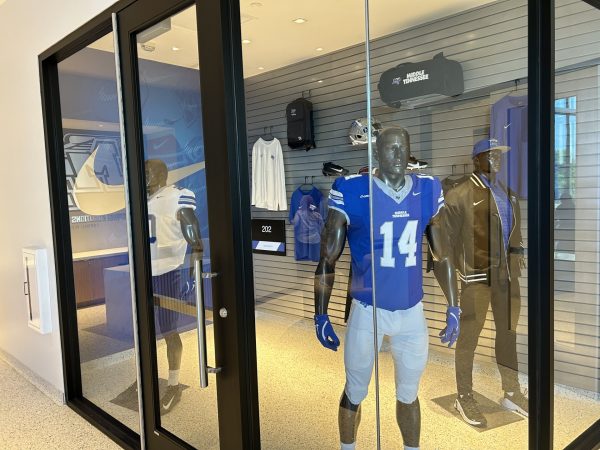
While the change ditches Middle Tennessee’s flashy combos, its primary purpose is to better protect the players, head coach Derek Mason said.
“We’re just not Oregon, we’re Middle Tennessee,” Mason said of the change. “We don’t need five uniforms. Nowadays where we’ve gone at MTSU is more about the things that matter… We put our student athletes in the best possible gear that they can wear for safety standards. That’s a different place than where we were a year ago. We made the choice to look at the smart dollar.”
Though the program certainly has an extensive history with alternate uniforms, whether it be the annual blackout game dating back to 2008 or the chrome helmets of the late 2010s, the current regime saw the need to cut back after bringing on longtime Auburn equipment director Dana Marquez in a consulting role last October.
For 18 years at Auburn, Marquez coordinated equipment among other responsibilities. He co-founded HelmetFitting.com with his wife Liz in 2017 and serves on the advisory boards for every major helmet manufacturer.
After a brief retirement he reached out to Mason, an Auburn co-worker in 2021, via text and came to work in an advisory position. Soon after his arrival, MTSU was scheduled to wear its all-black uniforms for a midweek clash with Kennesaw State.
As the equipment staff prepped for gameday, however, athletic trainers informed Marquez that the black helmets weren’t in usable condition and would need black SAFR caps to be game ready.
Only one issue; MTSU didn’t own any in that color.
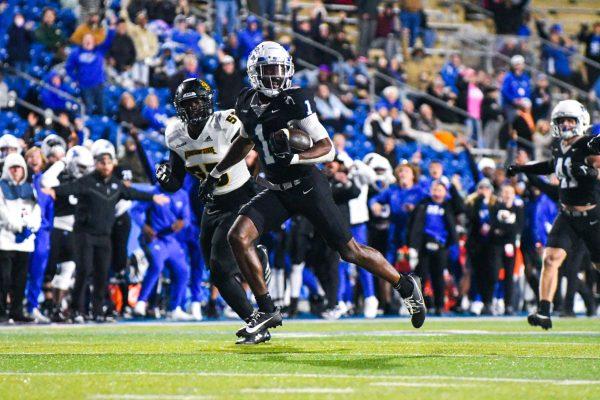
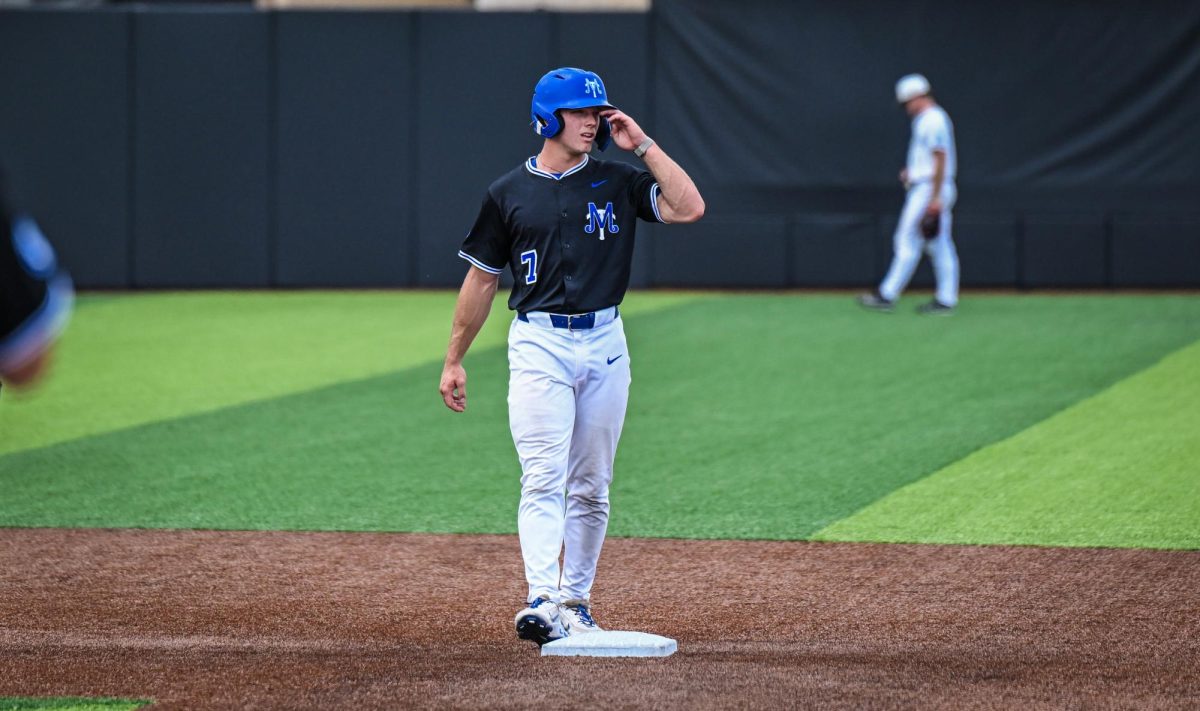
To head proper safety precautions, the Blue Raiders ran out of the tunnel the following night in black jerseys, black pants and contrasting white helmets. MTSU stuck with the white helmets and matching white SAFR caps for the remainder of the year in efforts to provide players with the safest available option.
Keeping the black lids shoved in lockers wasn’t just a fashion flounder though; more importantly it was a financial failure. After breaking down Middle Tennessee’s budget, Marquez discovered that the team spent a rough total of $84,000 per uniform set and $200,000 per year on uniforms worn once or less, he said.
“That’s just not even financially smart,” Marquez said. “The next thing was we had 408 helmets. Gray, white, blue, black and I’m like we don’t have the equipment department here to handle that inventory more or less the safety around that inventory.”
Marquez ran a similar budget project at Auburn and what he planned would save the program $500,000 in equipment purchases over a three-year span, became $1.8 million in practice.
In May, Mason promoted the equipment guru to the roles of associate athletic director for equipment and the program’s first general manager. He quickly slashed Middle Tennessee’s spending in half, cutting helmets per player from four to two. While lowering costs, the equipment staff continues to emphasize safety as MTSU is currently the only school in the country with in-house digital mapping technology.
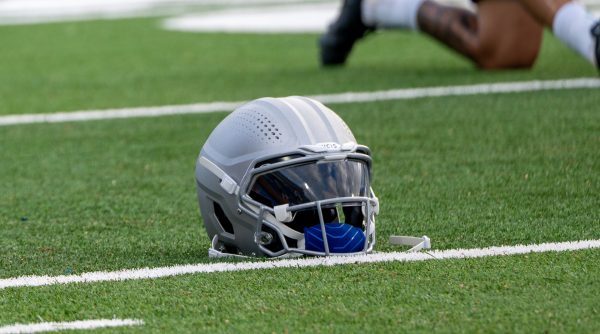
This state-of-the-art tech uses a bonnet system to scan each athlete’s head, providing digital pod renderings of what the inside of the helmet will look like and giving players the best helmet fit.
Warehousing the technology within the equipment department also allows for the staff to re-pod the helmets at any time, resulting in huge savings for a school like MTSU, Marquez said.
Marquez’s helmet project is slated to save the university $600,000 over a three-year span, with the encompassing budgeting plan likely saving over $2 million, he said.
“I don’t have to go buy 24 new helmets,” Marquez said. “I can just keep the helmets I have and send them back for reconditioning, have them repainted, have them recertified, brought back and I didn’t have to pay anything for that. So, it’s huge savings over a time period where you’re staying consistent.”
As for the savings, MTSU’s athletic department used the funds to hire 21 full-time staffers with the excess reserved for internal revenue sharing and NIL, Marquez said.
To contact the Sports editor, email [email protected].
Follow Sidelines on Facebook at Facebook.com/MTSUSidelines, on X @mtsusidelines and Instagram @mtsusidelines. Sign up for our weekly newsletter here.