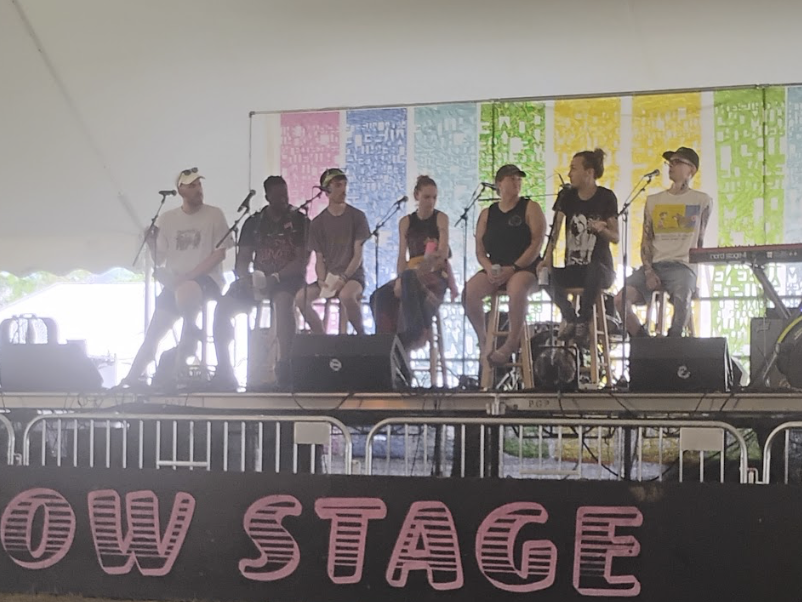
The crowd rose to their feet, swayed from side to side and sang, “We Shall Overcome,” in unison to close the “Art and Activism” panel at AmericanaFest on Thursday, Sept. 12.
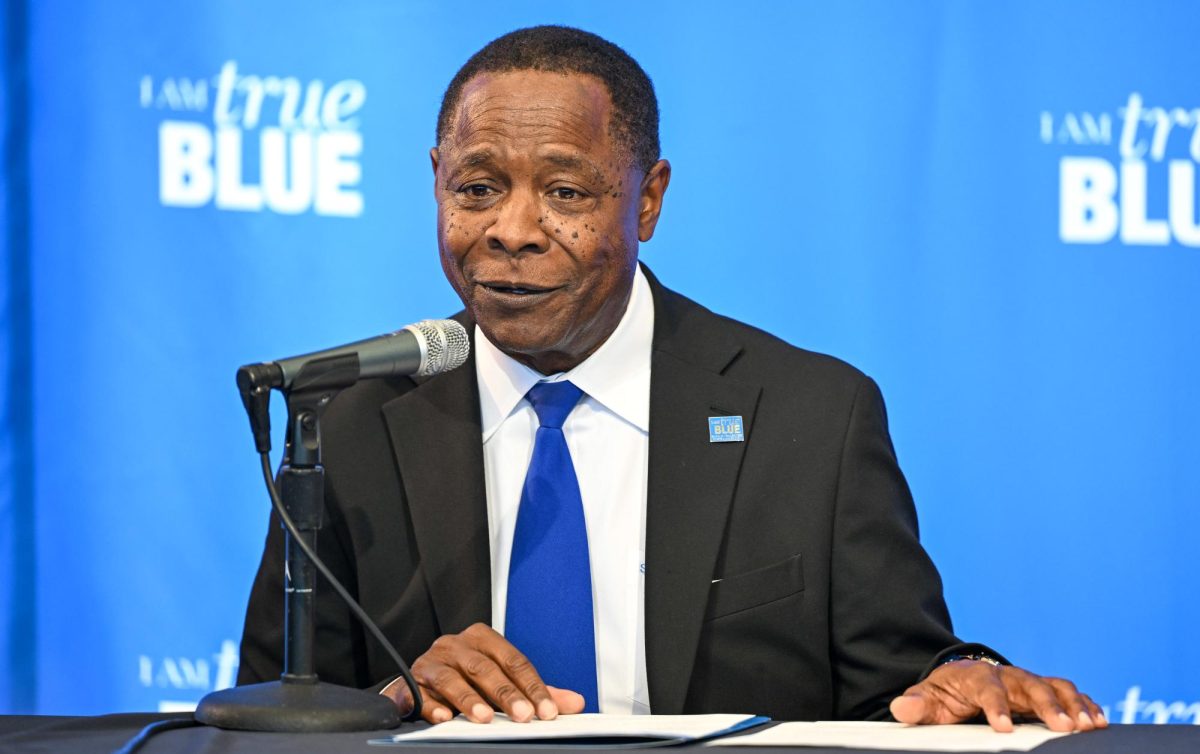
Tennessee State Representative Justin Jones, Grammy-nominated folk and Americana artist Allison Russell, and a leading voice in country music and social activism, Margo Price, moderated the discussion at the Embassy Suites hotel in Downtown Nashville. The panel led a discussion on how music can serve as a force for progress and an outlet for social justice.
Russell opened the discussion by sharing her story of growing up with an abusive adoptive white father. Russell turned her pain into song after discovering music written by Tracy Chapman.
“That was the game of freedom for me,” Russell said.
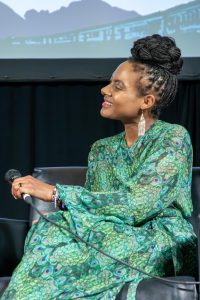
After Russell told her story, the song “Behind the Wall,” by Tracy Chapman, played. The room fell silent as Chapman’s haunting lyrics filled the space.
Price also reflected on how her own music has become a vehicle for protest. Price’s story began when she moved to Nashville, Tennessee, with an ex-boyfriend. It was where she first heard Bob Dylan songs, which she said, blew her mind “wide open.”
“Then I started listening to The Kinks, and I just loved that they also wrote about social issues, political issues, you know, it was conveyed by their experiences,” Price shared.
Price admitted that writing political songs was difficult at first, and it often felt awkward, but over time, she learned how to approach them with more grace. Her early songs, however, still carried power, and they helped inspire people to travel alongside her to Washington, D.C. and protest the Iraq War in September 2005. That moment was one of many in a long history of activism.
After Price opened up about her musical career, an excerpt of “Blowing in the Wind” by Bob Dylan played.
Jones connected Russell and Price’s stories to the long tradition of artists being involved in social movements and noted how songs have carried the struggle across generations. Jones praised Price’s song “Don’t Wake Me Up” as part of that lineage.
“We’re often told to make ourselves feel small in order to make these systems of oppression feel more comfortable and more acceptable,” Jones said.
Russell shared the importance of having spaces and creating music that can speak to people in different communities. She emphasized that songs have the power to cross barriers of race and class and create a common ground where healing can begin.
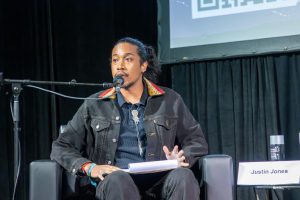
“I know that people who are members of faith communities often get to have that in their faith communities,” Russell said. “Many of us who are intersections get rejected by various faith … Whether it’s because we’re queer or because of our gender identity.”
Russell shared that when she ran away from home at the age of 15, she was lucky to find people who were making music who would accept her as she was.
In the same conversation, Russell mentioned the importance of getting through injustice through collective action and the healing power of community spaces where people can come together.
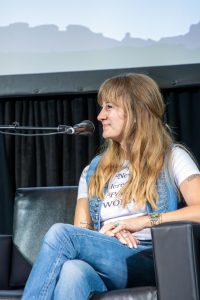
“I met an elder yesterday who said to me, ‘Our job is to liberate ourselves, and to break intergenerational curses of violence is to forgive the unforgivable,’” Russell said. “When we sing to each other, some of those built-up bigotries in the ears, just naturally break down, because everyone can change.”
Russell explained that if someone else can find the strength to forgive what seems unforgivable, then she has the ability to do the same. She also mentioned that politics is about people and how people treat one another.
When the conversation turned to Price, she described how she learned to use her music as a platform for political expression.
“It can be frightening to use your platform in these times, but when we sing together we’re stronger together, and when we lift our voices together it’s such a powerful thing,” Price said.
Price reflected on how people often forget that art carries a message. It’s not only about politics but also about broader social issues that affect everyone. She explained that everyone is navigating life and trying to make sense of what’s right and wrong.
The panel ended with a conversation about democracy, and what they imagine and hope for communities and future generations to come. Russell ended by sharing her vision of how communities can move forward in unity.
“We have to think beyond parties,” Russell said. “We can not operate from a place of vengeance or violence. And really, we have no choice but to do so.”
To contact the features editor, email [email protected].
For more news, visit www.mtsusidelines.com, and follow us on Facebook at MTSU Sidelines and on X and Instagram at @mtsusidelines. Also, sign up for our weekly newsletter here.