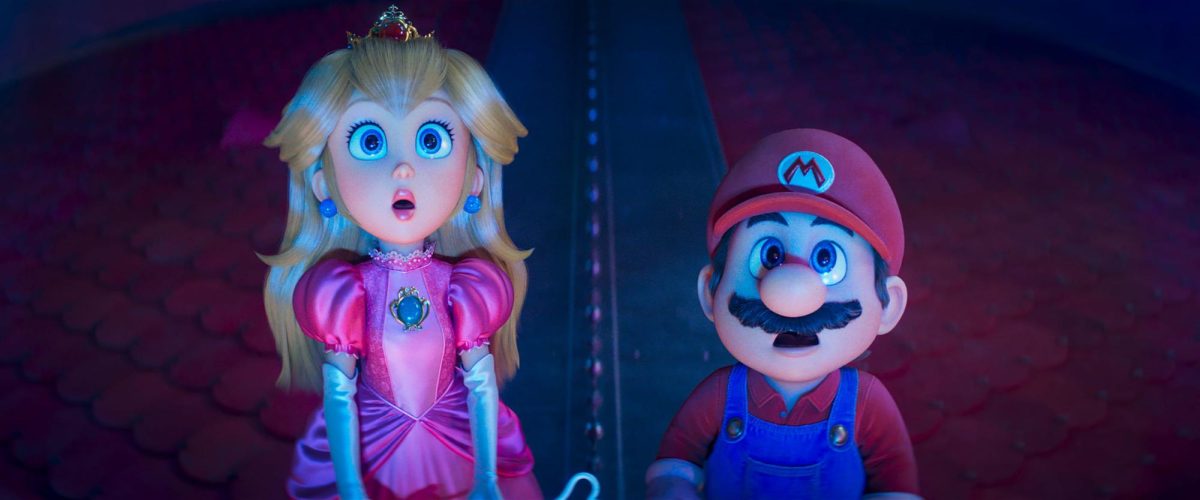
With “The Super Mario Galaxy Movie” set to release on April 1, Nintendo’s most recognizable character is heading back to theaters just shy of three years after his last cinematic outing.
Long before Hollywood, though, Mario’s story started in the arcade.
He first appeared in 1981’s “Donkey Kong” as Jumpman, a carpenter climbing beams to rescue a captive woman from a giant ape. The game’s success introduced players to a character who would quickly become the face of Nintendo.
That transformation came in 1985 with “Super Mario Bros.” on the Nintendo Entertainment System. The game established the series’ defining structure — Princess Peach is captured by Bowser, and Mario must navigate side-scrolling levels to save her — while also helping popularize the platforming genre. Its success turned Mario into a household name.
Nintendo didn’t stop there. “Super Mario Bros. 3,” released in 1988, introduced new power-ups like the Super Leaf and more complex level design. 1990’s “Super Mario World” brought in Yoshi, who quickly became one of the series’ most recognizable companions. These early entries refined the formula and showed just how much room there was to grow.
That growth took a major leap in 1996 with “Super Mario 64” on the Nintendo 64. By placing Mario in fully 3D environments, the game reshaped how players interacted with space in video games. Exploring Peach’s castle and jumping into paintings to access levels became a blueprint for future 3D platformers, influencing game design for years to come.
From there, Mario kept evolving. “Super Mario Sunshine (2002)” introduced new mechanics with the water-powered device Mario wields and a tropical setting, while “Super Mario Galaxy (2007)” pushed the series into space with gravity-based gameplay, letting Mario run across planets and launch between galaxies. Its orchestral score and more cinematic feel marked a high point for the franchise.
At the same time, Mario’s reach expanded far beyond the main games. Racing in “Mario Kart,” competing in minigames in “Mario Party,” and fighting alongside other Nintendo characters in “Super Smash Bros.” helped make him a constant presence outside of platformers. These spinoffs became staples in their own right, turning Mario into a go-to character for everything from casual game nights to competitive play.
Mario also branched into other genres, from sports titles like “Mario Tennis” to role-playing games like “Paper Mario,” further proving the character’s adaptability across generations.
His path to film hasn’t always been smooth. The 1993 live-action adaptation was poorly received, but 2023’s “The Super Mario Bros. Movie” found massive success and introduced the character to a new generation of fans.
Now, “The Super Mario Galaxy Movie” looks to build on that momentum, pulling from one of the franchise’s most inventive eras. The film is also set to introduce characters like Rosalina and Yoshi into this cinematic universe for the first time.
As Mario prepares for another leap — this time across galaxies — his evolution from arcade character to global icon is still far from over.
To contact the features editor, email [email protected].
For more news, visit www.mtsusidelines.com, and follow us on Facebook at MTSU Sidelines and on X and Instagram at @mtsusidelines. Also, sign up for our weekly newsletter here.