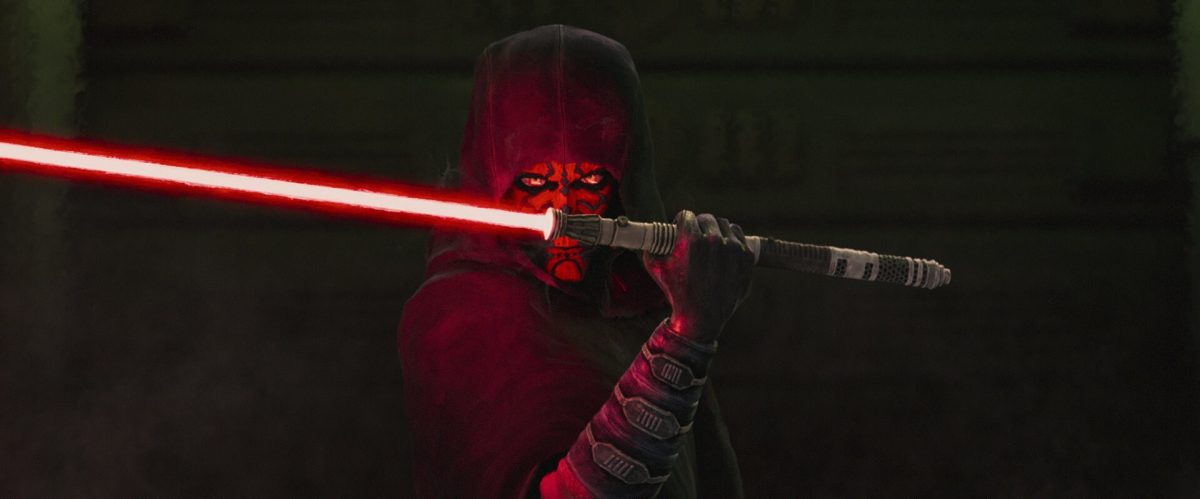
After years of expanded universe appearances and animated arcs, Darth Maul finally returns to center stage in “Maul: Shadow Lord,” the latest series in the Star Wars franchise.
With only two episodes released so far, the show wastes little time reestablishing Maul’s place in the galaxy — not just as a former Sith apprentice, but as a cunning survivor navigating the power vacuum left following the Clone Wars.
The opening episodes lean into a darker, more methodical tone than recent Star Wars entries, focusing on political maneuvering, crime syndicates and Maul’s growing influence in the underworld. Rather than relying on constant action, the show builds tension through dialogue and slow-burn storytelling, offering a closer look at a character often defined by his physical presence.
This approach reflects why Maul has remained a fan favorite since his debut in “Star Wars: Episode I – The Phantom Menace.” Despite limited screen time in the film, his striking design, minimal dialogue and intense combat style left a lasting impression. His apparent death only added to the mystique.
It wasn’t until “Star Wars: The Clone Wars” that Maul’s character was fully explored. The series reintroduced him with a deeper emotional core, revealing his survival, his rivalry with Obi-Wan Kenobi and his descent into obsession and vengeance.
Later appearances in “Star Wars Rebels” continued to expand his story, transforming him from a silent enforcer into one of the franchise’s most complex antagonists.
“Maul: Shadow Lord” also marks a return to one of Star Wars’ most successful storytelling mediums: animation. Some of the franchise’s most beloved entries — including “The Clone Wars” and “Rebels” — have thrived in this format, offering greater stylistic freedom and long-form character development.
Here, the series pushes that even further. The first two episodes showcase a distinct visual identity, blending darker tones and a muted color palette with watercolor- and oil painting-inspired textures. The result feels more atmospheric and experimental, reinforcing the show’s heavier themes while setting it apart from previous animated projects.
“Maul: Shadow Lord” appears to build on that foundation. The first two episodes suggest a focus on Maul’s attempt to consolidate power and redefine his purpose outside the traditional Sith hierarchy. That shift positions him less as a servant of a master and more as a figure carving out his own legacy.
Alongside Maul’s rise, the series introduces new faces shaping the broader conflict, including a Jedi and his apprentice navigating a changing galaxy, as well as a police chief determined to track Maul’s growing criminal influence. These parallel storylines add early layers to the narrative, suggesting a tension that could eventually collide with Maul’s plans.
There are still questions about where the series is headed. It remains unclear how deeply it will connect to established canon or whether it will introduce new conflicts that reshape Maul’s role in the broader timeline. However, the early episodes show promise in balancing character study with the larger stakes expected from a Star Wars story.
If the show continues on its current path, it could offer one of the most focused explorations of a single character in the franchise.
For now, “Maul: Shadow Lord” delivers a strong start, blending familiar lore with a more grounded, character-driven approach that sets it apart from recent entries.
With episodes releasing in pairs every Monday until episode 10, “Maul: Shadow Lord” is set to steadily expand Maul’s story in the weeks ahead.
To contact the features editor, email [email protected].
For more news, visit www.mtsusidelines.com, and follow us on Facebook at MTSU Sidelines and on X and Instagram at @mtsusidelines. Also, sign up for our weekly newsletter here.