The MTSU Arboretum grows to Level II, just in time for Earth Day
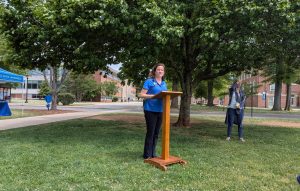
The Center for Energy and Sustainability hosted its Level II Arboretum unveiling ceremony outside of Peck Hall on Thursday.
MTSU is part of the Tennessee Arboretum Program managed by the Tennessee Urban Forestry Council. To be recognized as an arboretum by the TUFC, a ground space must have at least 30 distinct and approved tree species. To attain Level II, a ground space must have at least 60 trees.
The CES submitted its application to become a Level II Arboretum in 2024, which was approved in 2025.
MTSU currently has 73 distinct tree species on campus.
“Forty-seven [trees] are native, and 26 are non-native ornamental varieties,” Kristen England, the CES’s sustainability manager, said. “None of them are invasive. You cannot have an invasive tree in an arboretum.”
Among the non-native species, MTSU has 12 oak trees, four cherry trees and three magnolia trees.
Each tree registered with the arboretum has a tag that displays its species name, native status and its characteristics. The tag also features a QR code, which takes the user to an additional facts page that displays the tree’s history and its conservation status in Tennessee. The arboretum can also be explored using the CES’s interactive digital map.
Many of the non-native species on campus existed before the arboretum was established. England noted that some trees at MTSU have been there for over 50 years.
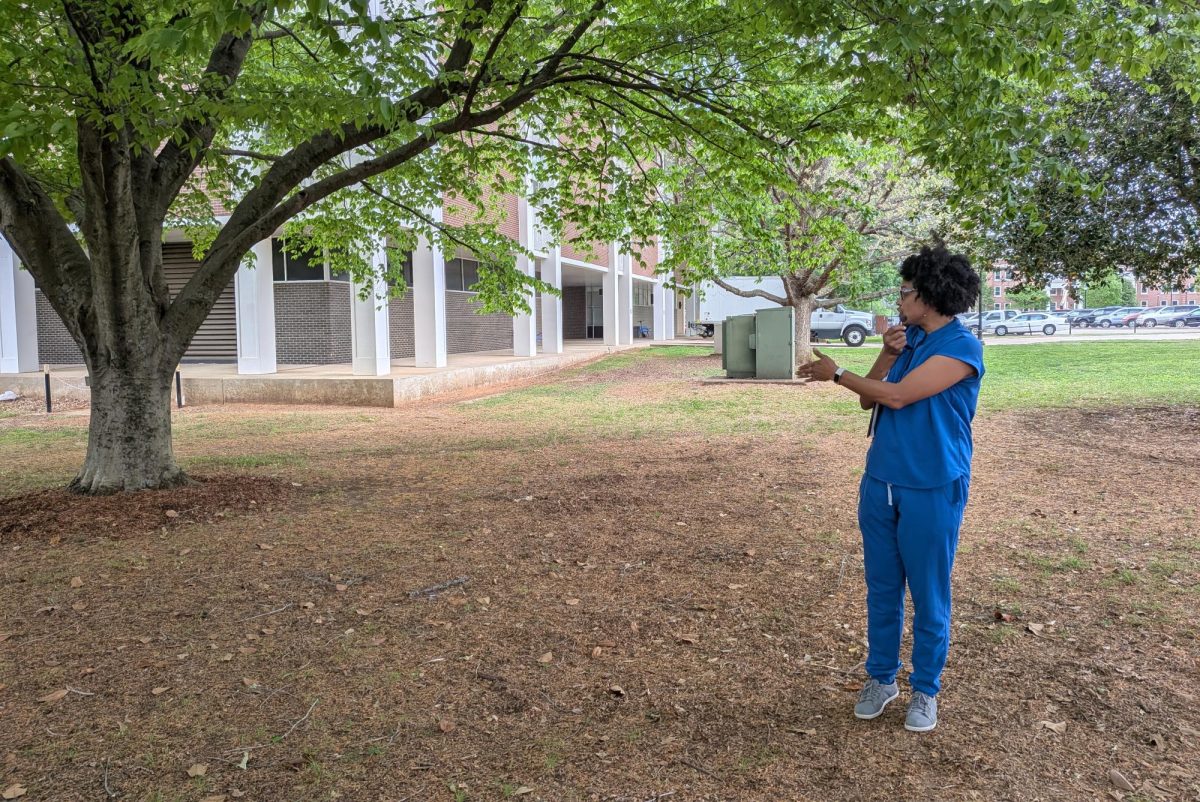
After the unveiling ceremony, attendees were invited to an informational tour that showcased some of the trees around Peck Hall. Among those were the Mount Vernon walnut trees in Walnut Grove. The oldest walnut trees date back to 1903, making them the oldest trees on campus.
“Everyone wants to see a great blue whale or go over to Hawaii, but we’re right here with some of the largest organisms most of us will ever experience in our life,” Kim Sadler, member of the Center for Environmental Education, said. “Trees are the largest living organisms that we have in a terrestrial environment, and what you see above ground, it’s below your feet as well. So, these guys are doing a really big job, and they’re doing an important job.”
Even though the arboretum trees are regularly maintained by the CES and MTSU groundskeepers, they still face many challenges on campus. Lightning and windstorms have knocked down multiple trees on campus. Many invasive species also threaten the trees on campus.
The emerald ash borer is an invasive beetle that has made a meal of ash trees in Tennessee. According to England, only one ash tree remains at MTSU.
Despite the setbacks, the CES is looking to advance to Level III and beyond.
To contact the features editor, email [email protected].
For more news, visit www.mtsusidelines.com, and follow us on Facebook at MTSU Sidelines and on X and Instagram at @mtsusidelines. Also, sign up for our weekly newsletter here.