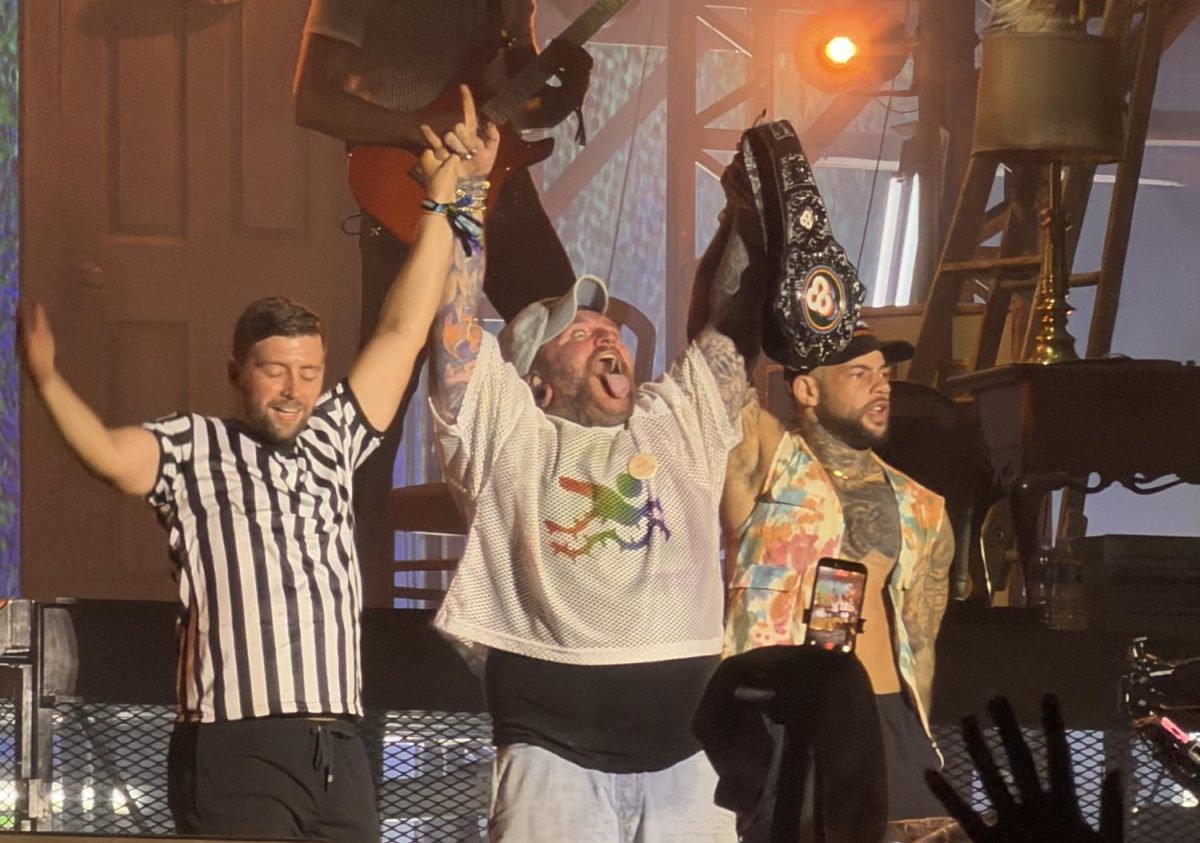
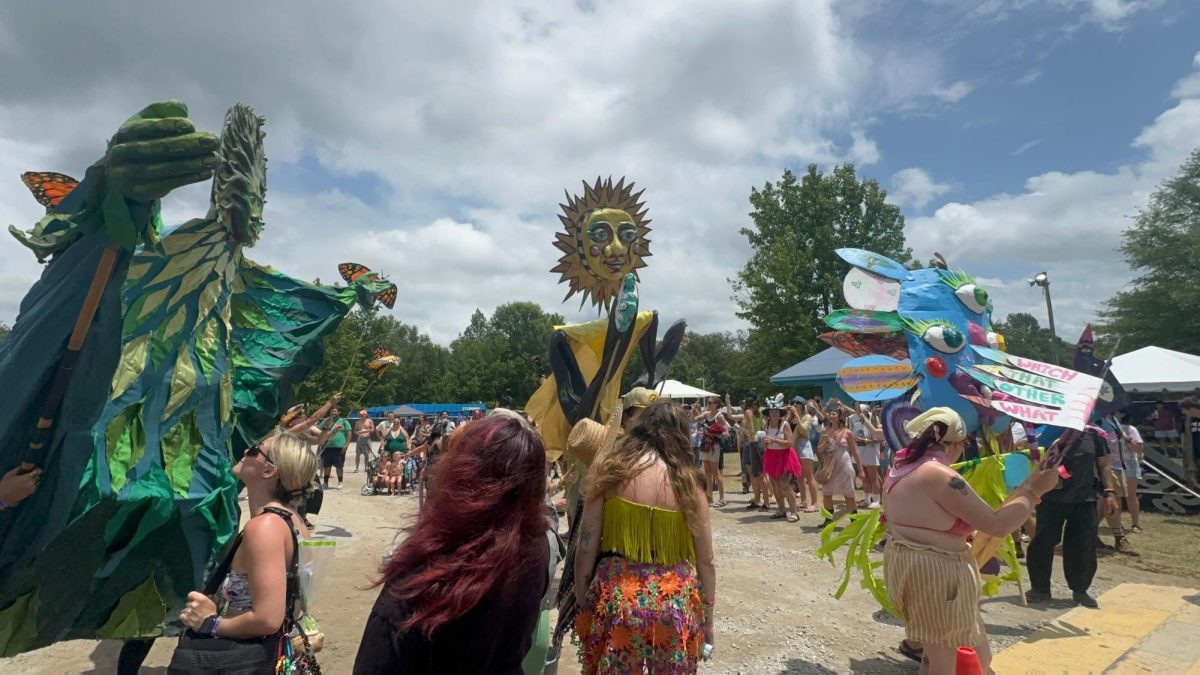
Shotgunaroo, a staple of the Bonnaroo Music & Arts Festival, gives Bonnaroovians a chance to kick off the weekend by chugging a drink of choice. Several of these cans end up crushed underfoot in the grass, but many volunteers and festival-goers immediately scoop them up for recycling.
For years, Bonnaroo has promoted environmental stewardship alongside its music programming. Through initiatives connected to Planet Roo and the Bonnaroo Works Fund, organizers encourage attendees to recycle, reduce waste and participate in community-focused sustainability efforts across Great Stage Park. As tens of thousands gather in Manchester for the four-day festival, questions remain about how visible and effective those programs are in practice.
Kelsey Dewald, the Director of Sustainability and Impact, oversees Planet Roo, Bonnaroo’s sustainability and community-action program. There, the How Stage — which is solar-powered — houses wellness opportunities like meditation, yoga or dance lessons and provides a platform for environmental awareness through panels and conversations.
“We wanted people to come here and ask that question,” Dewald said. “How can I make a difference? How can I get involved? How can I live a healthier, sustainable life?”
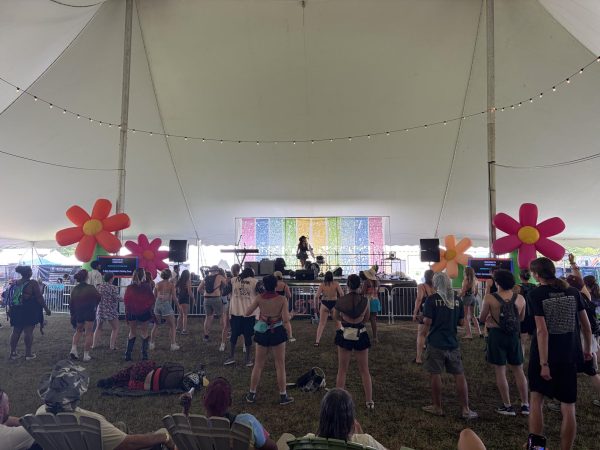
Planet Roo also hosts several non-profits, from stands where ‘Roovians can register to vote, to vendors selling zero waste, upcycled vintage clothes, to the opportunity to trace your personal carbon footprint.
All of these opportunities point to a larger mission: Environmental sustainability at Bonnaroo.
Volunteers work throughout the festival on environmental initiatives, education and community engagement efforts connected to the festival’s charitable programs.
Leah Hernandez, 28, works as a Planet Roocruit, volunteering to “spread that ‘Roo magic” to every corner — including throwing out trash.
“I come here and I feel fulfilled,” Hernandez said. “And I’m not paying hundreds of dollars.”
Volunteers encourage environmentalism by turning in bags of recyclables to earn prizes such as t-shirts, bandanas and even solar chargers.
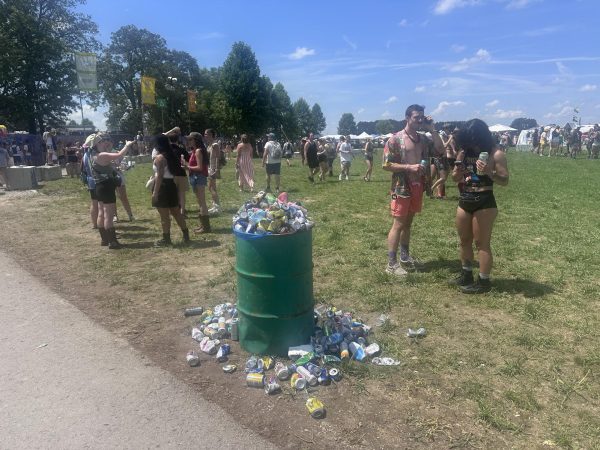
Hernandez volunteered to collect cans for recycling following Shotgunaroo, greeting festival-goers with a “Happy ‘Roo!” and a smile as she collected their empty drinks.
“Last year when I came here for Shotgunaroo the ground was covered in cans,” Hernandez said. “But this year it is so clean. I feel like people are really looking out for each other.”
One ‘Roovian, 25-year-old Owen Johnson, crushed his can, threw it on the ground and then picked it right back up for recycling.
“We’re about to recycle these cans we just shotgunned,” Johnson said. “So, a great start.”
Volunteer or not, many picked up others’ trash and placed it in the correct bin, said 25-year-old Izzy Evins.
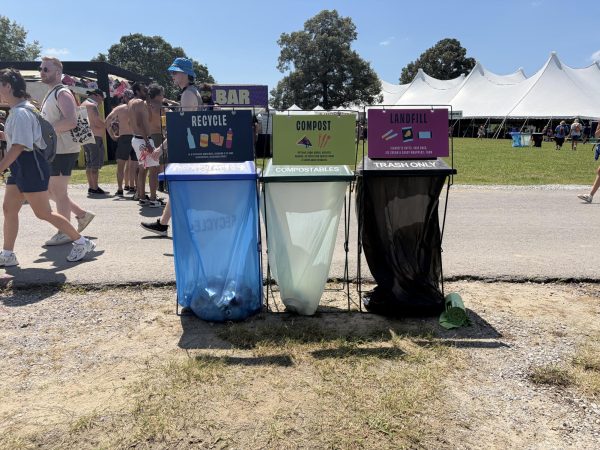
“I think [Bonnaroo] makes the best effort,” Evins said. “But there might be people who don’t always follow.”
Hernandez suggested a brief video for ticketholders that educates them about sorting trash, the festival’s sustainability efforts and all-around how to treat the Farm.
Outeroo contains far more trash cans than recycling and composting bins in Outeroo, Evins said.
In addition to taking on more visible efforts like recycling and refill stations, volunteers this year can pick up shifts where they sort composting and trash behind the scenes.
“It’s intended to be a closed-loop system where very little of what comes to Bonnaroo is wasted,” Dewald said. “We really try and find a home for everything.”
Whether it’s the visible efforts of volunteers guiding ‘Roovians to dispose of waste correctly or Planet Roo’s hands-on engagement with the mission, Bonnaroo’s goals of sustainability make an impact on festival-goers and contributors alike.
To contact the features editor, email [email protected].
For more news, visit www.mtsusidelines.com, and follow us on Facebook at MTSU Sidelines and on X and Instagram at @mtsusidelines. Also, sign up for our weekly newsletter here.