You’re reading a story from Sidelines 100, a project showcasing a century of student storytelling at Middle Tennessee State University. Sidelines 100 plans to highlight 100 stories from the newspaper archives this fall and spring.
This story originally ran in the Feb. 27, 2013, edition of Sidelines. Subscribe to our newsletter to stay on top of all things Sidelines 100.
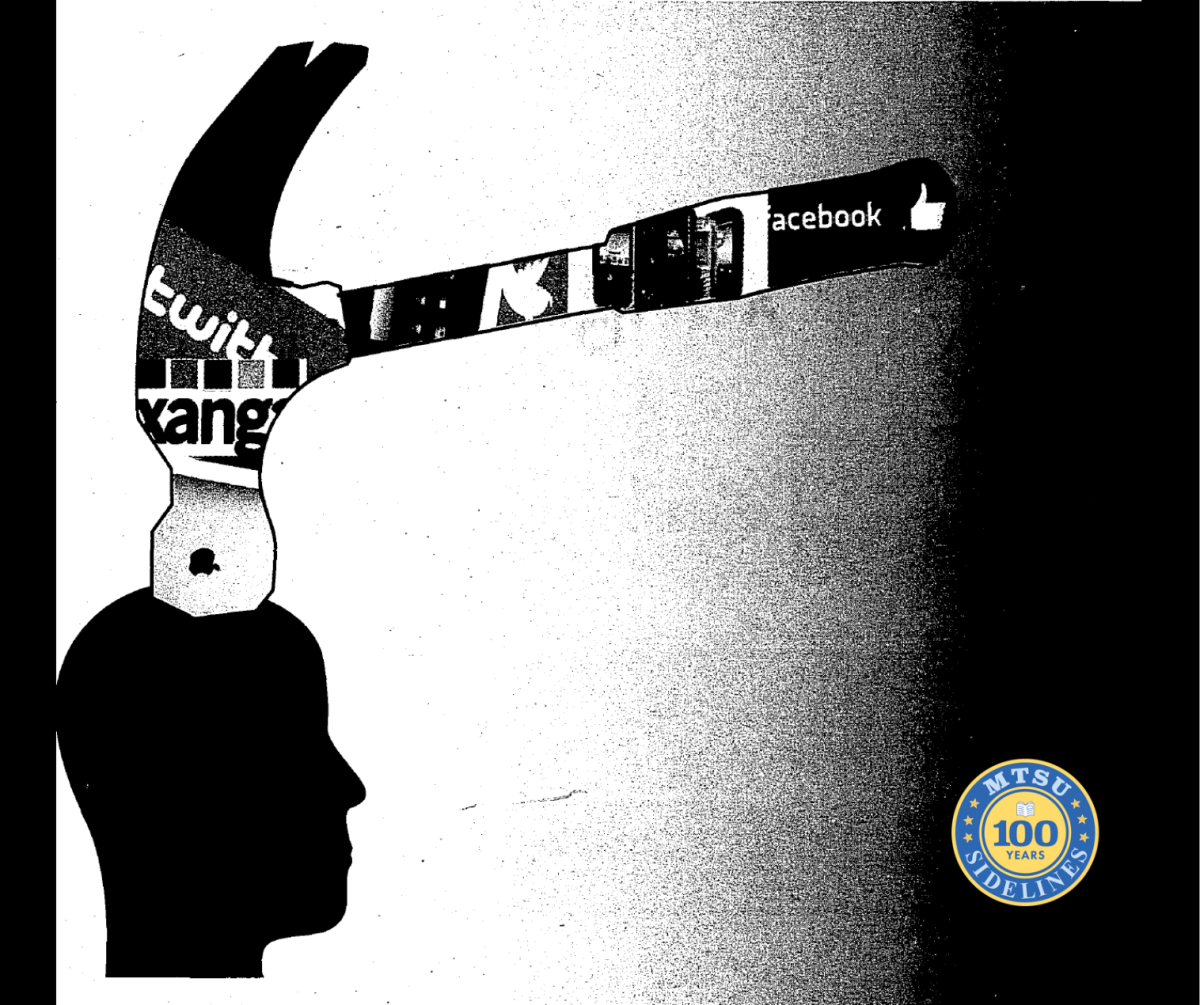
A complicated series of keystrokes and clicks is all it takes for hackers to bypass firewalls and Internet security to nudge prominent companies like Apple, The New York Times and Facebook out of their comfort zones.
Over the last few years, the “hacktivism” movement has propelled government legislation and sparked a furious debate on how to fix a problem where users have no boundaries.
President Barack Obama signed an executive order to ramp-up cyber security within the government.
“The cyber threat is one of the most serious economic and national security challenges we face as a nation,” Obama said.
The order was signed in early February and aims to develop a “Cybersecurity Framework.” The framework is structured to reduce the risk of cyber threats to critical infrastructure by requiring all federal agencies to report threats and to work collaboratively with industry leaders to set up stronger security measures; In 2011, hacktivists thieved 58 percent of the stolen online data, according to a report published by telecom company Verizon.
Although the information stolen was not notably sensitive, such as credit card information, the group made known that they are a force that should not be ignored. Hacktivists use technology to break into secure sites and make a political statement by changing the site, taking it down and acquiring and leaking information. The agenda of a hacktivist is different from that of a cyber criminal. A hacktivist acts to make a point, not a profit. Most of the attacks speak out in support of free speech and the free flow of information on the Internet.
Incidents have included taking over the Wall Street banking website, the Westboro Baptist Church website, Sony, cybersecurity firms, various Twitter accounts and multiple government-protected websites like the FBI.
“Bluntly, if it’s connected to the Internet, there will be some vulnerability,” said one MTSU computer science professor.
Attacks of hacktivists have raged since the90s, but the recent organization of Anonymous brought a recognizable face to the world of hacktivism. The group hides behind themask of Guy Fawkes from the movie “V for Vendetta” and uses the slogan “We are Anonymous. We are Legion. We do not forgive. We do not forget.”
The death of Aaron Swartz, co-founder of Reddit, excited a group of hackers to action in January of this year.
Aligning themselves with Anonymous, this group claimed that the alleged suicide of Swartz was a fault of the U.S. government.
They responded by hacking into the website of the United States Sentencing Commission and changing the homepage to a message that suggested they had sensitive information on the U.S. judges.
Defining Anonymous as an organization is a hard task.
They are leaderless, non-centralized, and, as their name suggests, completely anonymous.
In fact, the name merely acts as a banner for many participants in the hacktivist movement to rally behind.
Anonymous may be the most prominent of hacking groups, but they are not without competition. Last Thursday, their Twitter account was hacked by a rival hacking group known as Rustle League. The act has the potential to ignite a kind of cyber warfare.
Growing frequency in all hacktivist activity poses a threat to all who run a website or post information online. The increasing popularity of this movement has caused minor-scale panic, and as the president’s order makes clear, it will see substantial countermeasures in the near future.
To contact the news editor, email [email protected].
For more news, visit www.mtsusidelines.com, and follow us on Facebook at MTSU Sidelines and on X and Instagram at @mtsusidelines. Also, sign up for our weekly newsletter here.