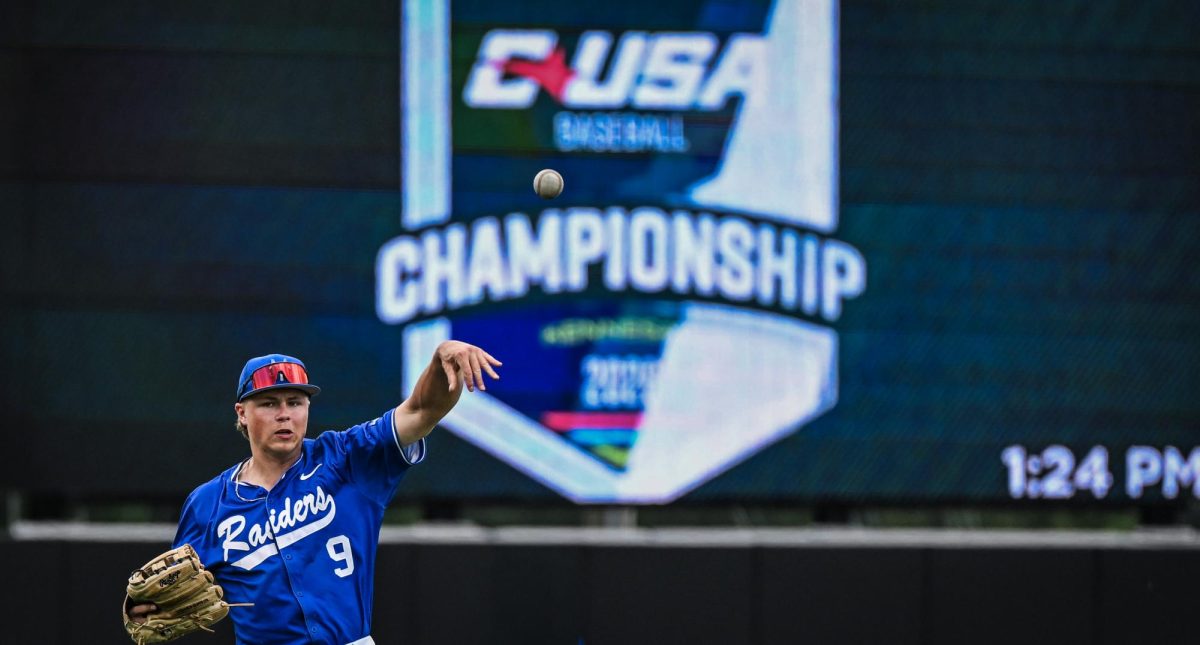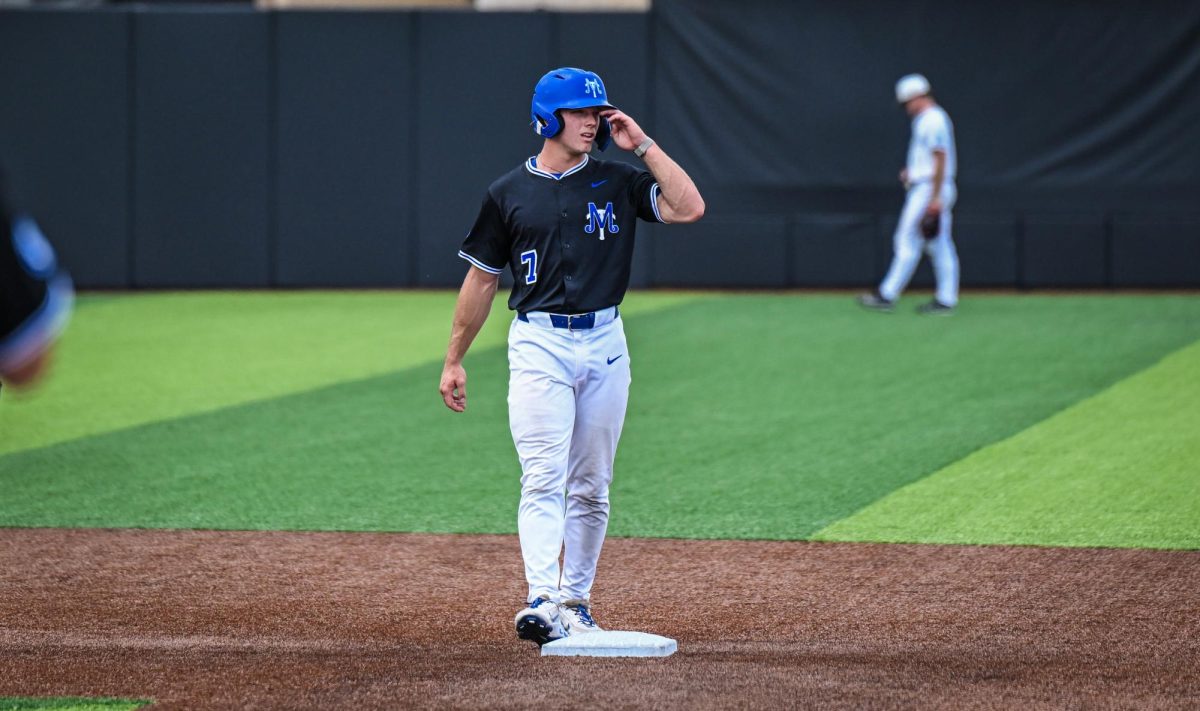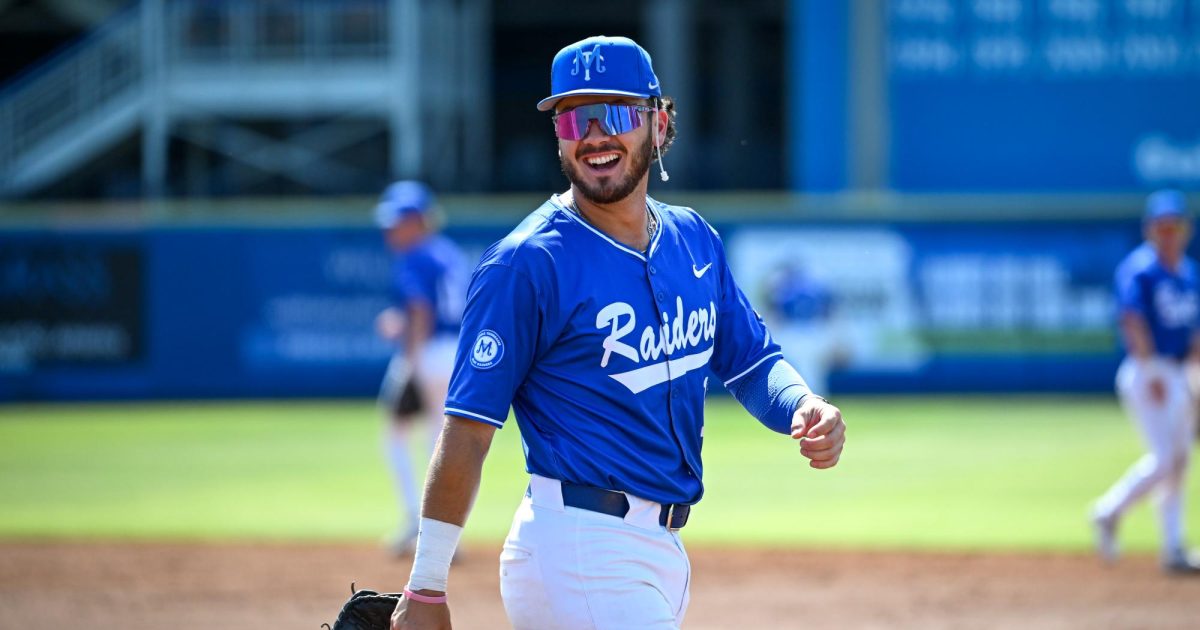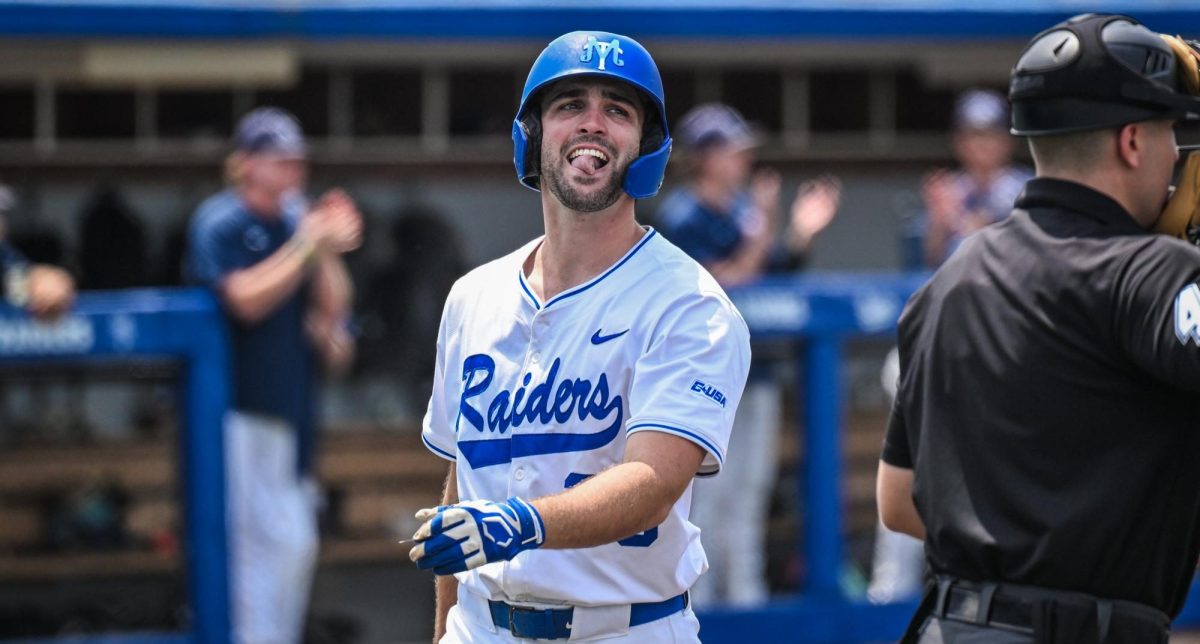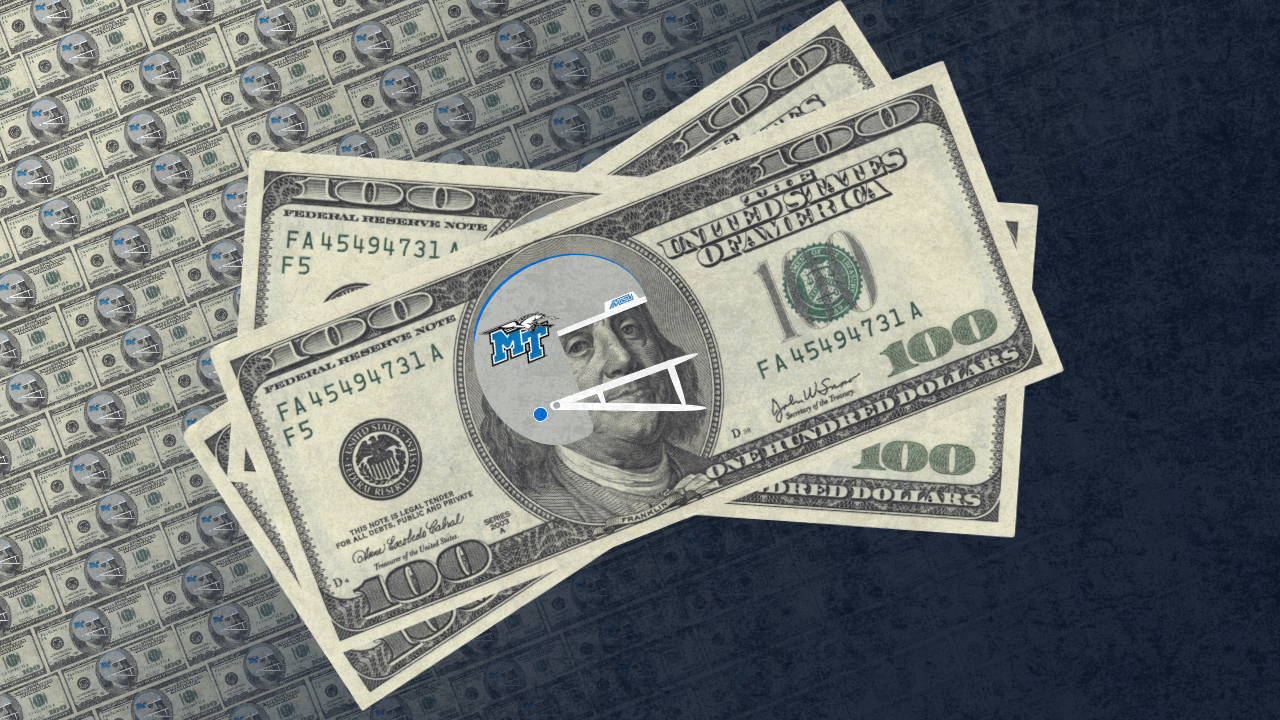

As the 2025 college football regular season came to a close, the transfer portal opened again, offering students a 15-day window to mull offers from other schools and negotiate their playing futures.
Only this time, there was an added piece to the puzzle – one MTSU football general manager Dana Marquez will never forget.
On June 6, 2025, a federal judge approved the House v. NCAA settlement, allowing Division I schools to directly pay student athletes for the first time, starting on July 1. Marquez and head football coach Derek Mason quickly signed players to their first revenue-sharing contracts with few issues initially.
This time, they all had agents, ranging from licensed professionals to handlers and parents.
“You saw the method of how this was going to play out really quickly,” Marquez said.
Soon, calls from those agents began pouring in with the average rate per player set at $150,000, roughly two to three times what MTSU paid in 2025, Marquez said. Most players who departed left for a better opportunity rather than money specifically, such as starting running back Jekail Middlebrook, who left to play at the University of Virginia.
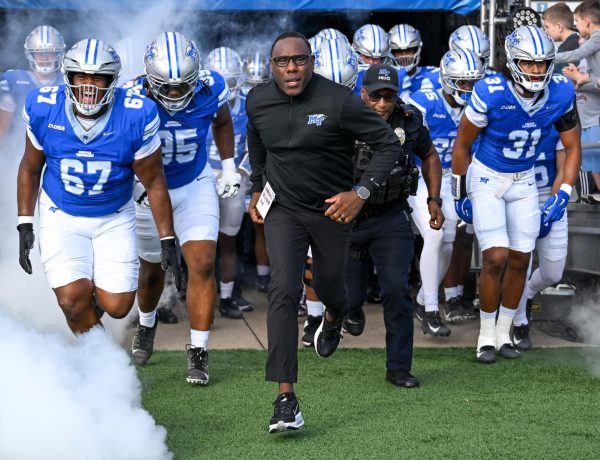
Still, MTSU and other Group of Six universities aren’t even in the same financial conversation as their power conference counterparts, Marquez said.
“They pay their walk-ons more than we pay a lot of our starters,” Marquez said. “… It’s the New York Yankees’ bankroll and the Oakland A’s, right? We’re playing ‘Moneyball’, and they’re not worried about it.”
Outside of traditional scholarships, there are currently two ways for NCAA student athletes to receive compensation – university revenue sharing and third-party name, image and likeness (NIL) deals.
In an era of blank checks from boosters and 18-year-old millionaires, schools like MTSU hardly stand a chance. But it won’t stop them from trying.
Anticipating revenue sharing’s approval, Mason hired his former Auburn University coworker, Marquez, to draft a budget for what MTSU’s potential team salary cap could look like. Marquez said he and Mason then met with university president Sidney A. McPhee and director of athletics Chris Massaro to discuss how much spending money they would actually have for a roster.
From there, Mason’s staff devised a roster construction plan to fit within MTSU’s monetary confines, which was a major undertaking for Marquez, he said.
In year one of revenue sharing, the university paid each participating football player on the first day of the month from July through December. Now in year two, MTSU has rearranged the payment plan to better accommodate its budget, Marquez said.
For example, if a player makes $100,000 per year, MTSU will pay them $40,000 over the spring months when they aren’t in season, and the remaining $60,000 in the fall when the Blue Raiders play football.
The funds used to pay the players come from revenue the athletic department generates from the football program, such as ticket sales, “guarantee games,” concessions, gameday parking, TV contracts, merchandise, money saved via budget restructuring and corporate sponsorships.
As MTSU tries to keep up in the ever-changing revenue-sharing arms race, Marquez hopes for more community and student involvement.
“If you can start collaborating with the community, which is a big thing in mind, it has been since I got here, and getting them to understand that the more you buy into the program, the better the team’s going to get really fast,” Marquez said.
Truthfully, it’s a hard sell for a football program that paid some players double the annual salary of a Tennessee public educator and won three games while doing so last year, but Marquez hopes future revenue boosting endeavors will help all students – not just the athletes.
A recent agreement between Blue Raider football players and Murfreesboro Hyundai is an early example of that. The dealership pays the student athletes to shoot commercials while offering significant discounts on vehicle services to all MTSU students and faculty with a valid ID.
“We want to be able to give back,” Marquez said. “We want you guys to come to the game. We want the fan base here, and in turn, we want you to share.”
Prior to revenue sharing legalization, NIL was the only source of non-scholarship income for student athletes.
Former MTSU linebacker Parker Hughes was one of the first student athletes to fully take advantage of NIL opportunities by building his personal brand.
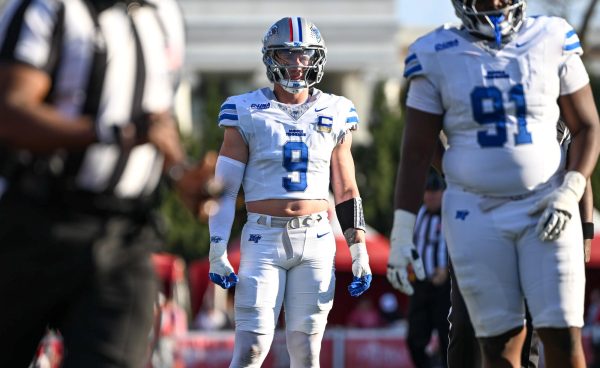
Hughes walked on at Middle Tennessee in 2021 and worked two jobs while waiting to be put on scholarship. After that time finally came in 2023, he and teammate Tra Fluellen tested the NIL waters with one of their favorite local food joints, Nacho’s Mexican Restaurant.
What started as social media shoutouts in exchange for some free food eventually evolved into consistent gigs for the linebacker. Hughes signed with an NIL agent in 2024 and held as many as 10 deals at a time, with varying time commitment and profit levels.
Combined with his scholarship, Hughes’ NIL deals allowed him to further focus on football, rather than financials.
“I was definitely blessed to get those,” Hughes said of his NIL deals. “It helped me a lot.”
Hughes received his first share of revenue during his final season as a Blue Raider. A team captain and second team All-Conference USA selection in 2025, Hughes said while bank account talk was never big in the locker room, the average Group of Six starter made anywhere from $70,000 to $100,000 last season.
As someone who entered college football paying his own tuition and exited a benefactor of revenue sharing and NIL, Hughes understands both the perks and challenges the sport currently faces.
“It’s not a bad thing, but it definitely changed some things,” Hughes said. “I think everybody’s still trying to get used to it, but we’re getting better at it as it goes.”
Although revenue sharing is the college sports world’s hot topic, the MTSU community is steadfast in supporting its programs through NIL.
In 2024, a group of MTSU alumni joined forces to form Raiders Rising, the official NIL collective of the Blue Raiders.
Jeff Murphy, a former MTSU quarterback and owner of Domenico’s Italian Deli in Murfreesboro, serves on the board and works to connect student athletes with local businesses.
While revenue sharing generates larger paychecks than NIL for student athletes, Raiders Rising helps supplement the university’s efforts, Murphy said.
“The athletic department has their plan,” Murphy said. “Each individual team has their plan on how they’re gonna operate different things. So, we just try to bridge the gap to where we can be helpful.”
Whether it’s donations toward a specific sport, or promotions with a specific athlete, Raiders Rising continues to positively impact MTSU Athletics.
“We want to be helpful, we want to help the student athletes, the programs and MTSU be successful,” Murphy said. “We all graduated from there. We love the university. We just want to win in all facets … sports, academics, brand recognition, all of it.”
This is a story that ran in the Sidelines 100th Anniversary Edition newspaper, a print edition meant to commemorate the 100th anniversary of Sidelines.
Lead photo illustration by Brett Walker.
To contact the sports editor, email [email protected].
Follow Sidelines on Facebook at Facebook.com/MTSUSidelines, on X @mtsusidelines and Instagram @mtsusidelines. Sign up for our weekly newsletter here.