

“The Running Man” dances around heavy topics, desperate to play it safe and maintain a middle ground, but eventually crumbles under its own weight.
As cinemas overpopulate with remakes, sequels and requels, viewers must question whether getting the same story again is worth the ever-rising ticket prices.
“The Running Man” follows Ben Richards (Glen Powell), a working-class citizen backed into a corner as he desperately tries to provide for his family. This same desperation leads him to be on a game show sporting the same title as the film, where he must survive 30 days on the run while being hunted until death by nearly the whole country.
Since the original 1982 novel by Stephen King places the events in the year 2025 — which seemed like a distant future at the time — the 2025 adaptation definitely had some modernizing to do.
This modernizing comes in the form of deepfake videos, the culture of virality and constant surveillance. These touches add a sense of relatability, but the film rarely connects its technological evolutions to any meaningful commentary.
When themes like totalitarianism, class disparity and everything in between are approached, good substance and hard-hitting plot devices are necessary. “The Running Man” pulls its punches and dodges around anything profound, leaving it capsizing in the sea of remakes.
For an action flick, “The Running Man” mostly delivers. Great fight choreography and intense action sequences litter the middle of the film, keeping viewers paranoid as Richards scrambles to survive the sadistic game show.
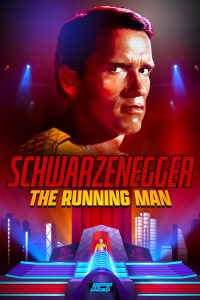
In the original 1987 film, Richards fights face-to-face with hunters. In the remake, he’s hunted by the full viewing audience as well as five professional hunters as he races against time.
Tension is raised in the modernized retelling — every time the viewer notes a civilian looking at Richards a little too long, a foreboding sense of dread settles in. Action-packed exposition arises from these new parameters, keeping Richards — and viewers — on his toes.
“The Running Man” manages a balancing act of humor and action in between the first and final act, marking it as a classic theatrical experience. It never deviates from being a simple, fun time and maintains the entertainment value at its core.
Where the film succeeds in entertainment and theatrics, it fails in commentary and depth.
As dystopian concepts become more strangely realistic, the film’s social critique and political climate suggest a sense of relatability. However, the themes stay moderately shallow.
The script maintains its withdrawn, careful writing throughout the runtime, nervous to say anything too critical or, as some may call it, “woke.” Subtle jabs are made at the top 1% and its abuse of the lower classes, as if the average viewer weren’t already aware of that distinction.
As more films are released — some original and some relying on past material — the line between entertainment and enlightenment has blurred. “The Running Man” fails to find its space in that blur, leaning towards entertainment instead of bringing anything profound to the audience.
“The Running Man” is an enjoyable, corny watch, similar to the 1987 version. However, with themes that draw many similarities to the modern world, much more could have been done to differentiate them and make them truly stand out.
To contact the features editor, email [email protected].
For more news, visit www.mtsusidelines.com, and follow us on Facebook at MTSU Sidelines and on X and Instagram at @mtsusidelines. Also, sign up for our weekly newsletter here.

















View Story Comments