Editor’s note: Representative Jody Barrett represents Dickson County, not Dickinson County.
Tennessee has some of the strictest abortion laws in the country. In March, two lawmakers proposed legislation to make them stricter.
The proposed amendment to House Bill 570/Senate Bill 738 would allow courts to charge women who undergo abortion, as well as their doctors, with homicide, subject to the same punishments – including life imprisonment and the death penalty.
The bill’s sponsor, State Representative Jody Barrett (R-Dickinson), and cosponsor, Senator Mark Pody (R-Lebanon), referred the amendment to the House Population Health Subcommittee. It failed on March 10, after the Health Committee called the bill, and no votes were heard.
“Murder should be murder, whether it’s a person in being or a person in utero,” Barrett said in an interview with News Channel 5.
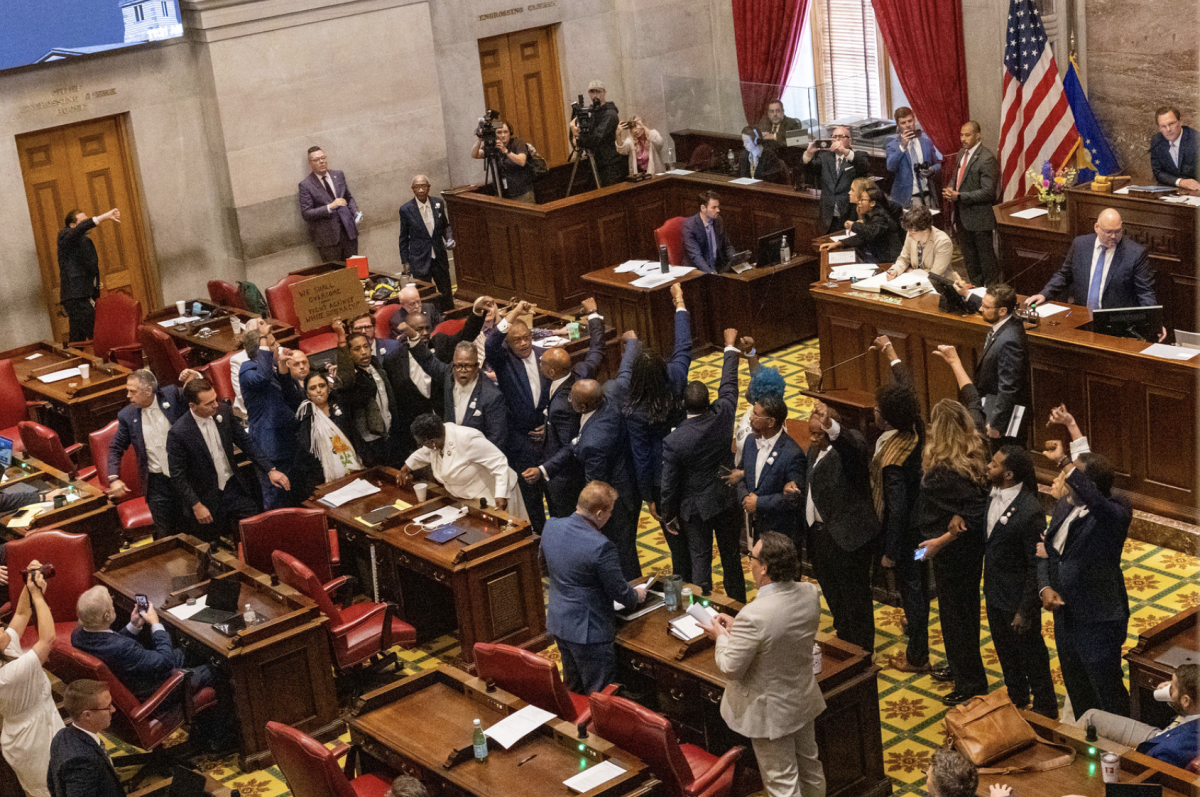
Several Christian and anti-abortion advocacy groups backed the bill. Supporters for and advocates against the bill flooded the hearing room and hallway.
“Next year we will be back,” Jeff Durbin, the leader of End Abortion Now, said at the hearing. “We are going to win this thing.”
The proposal stated, “all preborn children should be protected with the same criminal and civil laws protecting the lives of born persons by repealing provisions that permit prenatal homicide and assault.”
This concept is referred to as fetal personhood, a legal concept that designates human fetuses – and sometimes embryos and fertilized eggs – as entities with full rights and protections under the legal system.
Tennessee’s History of Abortion Bans
Since the U.S. Supreme Court overturned Roe v. Wade in 2022, Tennessee’s abortion ban has been in effect with few exceptions outside of life-threatening situations, which are unspecified by the law. There are no exceptions for rape or incest.
In Tennessee, the procedure is a Class C felony, punishable by up to 15 years in prison. Mailing abortion pills is also categorized as a felony in the state, and minors are required to have parental consent when seeking an abortion.
MTSU senior Bella Mule felt the death penalty is an unfair punishment for someone seeking “life-saving treatment,” while other crimes go under-sentenced.
“We’re just not focusing on the right priorities,” Mule said.
Maternal and Infant Mortality
March of Dimes, a group focused on research, education and advocacy to improve the health of mothers and babies, published a report in 2025 detailing leading causes for infant and maternal deaths in Tennessee. The report found that Tennessee has some of the worst infant death rates in the country and ranked last for maternal mortality.
About 260,000 women died during and following pregnancy and childbirth in 2023, according to the World Health Organization. That is about one death every two minutes. Around 92% of these deaths occurred in lower-income countries. Most could have been prevented, usually occurring because of severe bleeding, infections, blood pressure issues (pre-eclampsia and eclampsia) and unsafe abortions.
In the state of Tennessee, Black women experience a rate of maternal mortality nearly three times that of non-Hispanic white women, according to the state’s 2025 report. This can be attributed to several factors, including racial disparities in the healthcare industry.
“To avoid maternal deaths, it is vital to prevent unintended pregnancies,” the organization said. “All women, including adolescents, need access to contraception, safe abortion services to the full extent of the law, and quality post-abortion care.”
According to the organization, maternal mortality rates can be addressed through investments into universal health coverage and addressing inequities in access to and the quality of maternal and newborn health services.
Domestic & Intimate Partner Violence
Tennessee is also ranked fourth in the nation with the highest domestic violence rates, according to Break the Cycle, an organization dedicated to advocacy and an end to domestic violence.
In Tennessee, over 50% of women and about 25% of men experience domestic violence at some point in their lifetime, according to a report by World Population Review.
The state’s low rating stems from high domestic violence rates, critical shelter shortages and limited firearm restrictions for abusers. Firearms are the most common weapon used in roughly four out of five homicides.
Tennessee does not have a statewide Extreme Risk Protection Order law, or “red flag laws,” that allow for the temporary removal of firearms if a court finds a person a risk to themselves or others. In 2024, Governor Bill Lee signed legislation to prevent local government from enacting red flag laws.
Tennessee became the first state to create a public registry for repeat domestic violence offenders in January.
A Look Toward Change
On April 9, MTSU’s Human Development and Family Science program hosted a public panel on intimate partner violence, stalking and sexual assault. The panel featured six guest speakers, offering their expertise on topics like reporting domestic and sexual abuse, police responses to domestic calls and university response measures to abuse and stalking reports.
Before working in academia and politics, speaker Lauren Pinkston lived in Southeast Asia researching human trafficking and starting businesses to employ survivors.
She spoke at the panel on the steps Tennessee must take to protect victims of assault and violence. These steps included finding alternatives to talk therapy, which she described as ‘the most invasive form of therapy’ for traumatized individuals, appointing trauma-informed psychologists in courtrooms, improving the process of obtaining protective orders and addressing gun reform in the form of safe storage laws.
Pinkston also spoke of the importance of affordability and welfare programs in the prevention of abuse.
“I cannot overstate how much of the violence that we see is tied to economic stress,” Pinkston said. “Addressing the economic crisis in this state is going to be critical in preventing that.”
The panelists emphasized the importance of community in healing from abuse.
“When you’re in that moment, you think you’re the only one that’s experienced that tactic or that behavior,” Ericka Downing, MTSU graduate and executive director of the Domestic Violence and Sexual Assault Center, said. “Healing is not linear, and sometimes we all need a little support to get to the other side.”
The National Domestic Violence Hotline is available 24/7.
To contact the news editor, email [email protected].
For more news, visit www.mtsusidelines.com, and follow us on Facebook at MTSU Sidelines and on X and Instagram at @mtsusidelines. Also, sign up for our weekly newsletter here.